

Laying tarmac over your existing driveway can be a cost-effective solution, but the final price depends heavily on what surface you’re starting with. The condition, material, and preparation required all impact your budget significantly.
Surface Assessment Costs
Before any work begins, expect to pay £150 to £300 for a proper structural assessment. This evaluation determines whether your existing surface can support new tarmac without future problems.
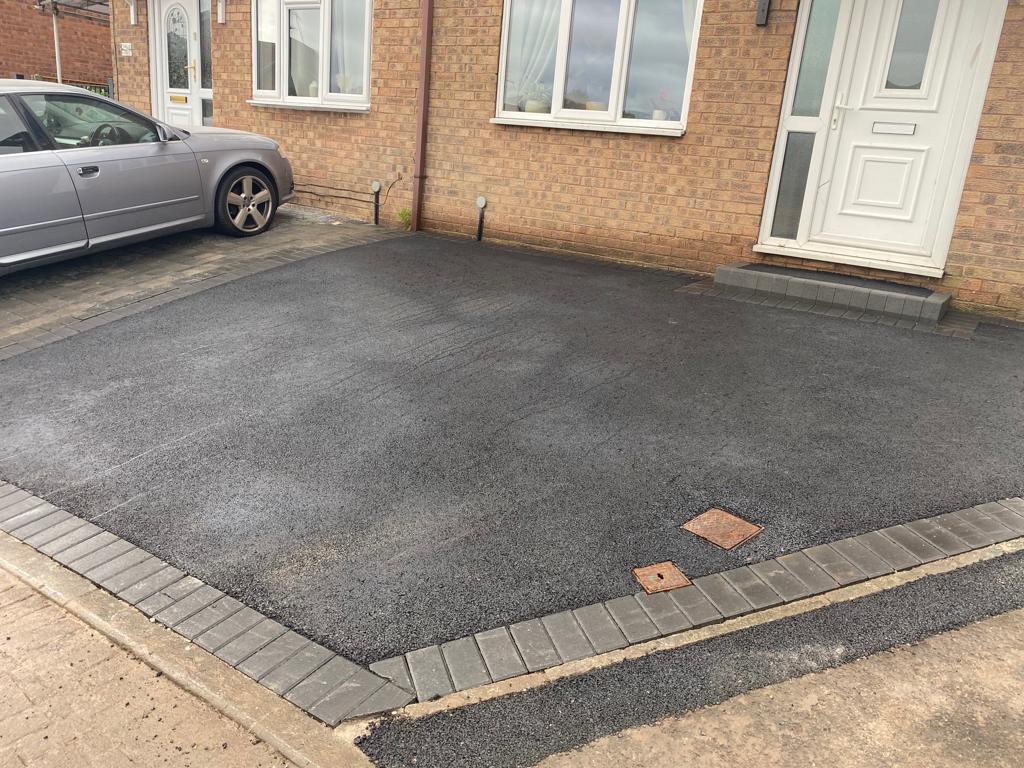
Concrete bases typically need minimal preparation, whilst broken or uneven surfaces require extensive work. Block paving removal adds considerable expense, often doubling the preparation costs. Specialist contractors can assess whether existing surfaces are suitable for overlay or require complete reconstruction.
Preparation Work Pricing
Surface preparation represents 30% to 50% of your total project cost. Here’s what different existing surfaces typically require:
- Stable concrete: £8 to £12 per square metre for cleaning and bonding agent
- Damaged concrete: £15 to £25 per square metre for repairs and levelling
- Old tarmac: £10 to £18 per square metre for patching and preparation
- Block paving: £20 to £35 per square metre including removal and disposal
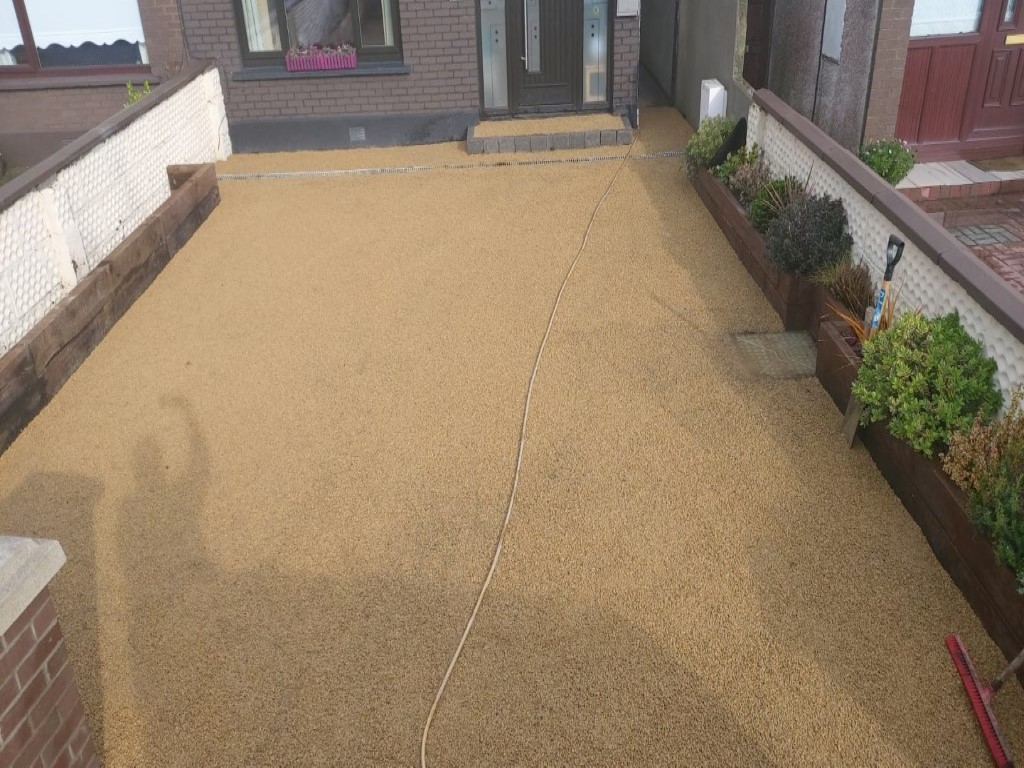
- Gravel surfaces: £12 to £20 per square metre for compaction and base correction
Tarmac Installation Costs
The actual tarmac laying costs £25 to £45 per square metre for standard surfaces. This includes a 50mm thick wearing course over your prepared existing surface.
Larger driveways benefit from economies of scale, with prices dropping to £20 per square metre for areas over 100 square metres. Smaller jobs under 30 square metres often carry premium rates.
Why Surface Quality Matters
Cutting corners on surface preparation leads to expensive failures within two to three years. Poor preparation causes cracking, sinking, and water penetration that requires complete reconstruction.
Quality preparation work costs more initially but extends your driveway’s lifespan to 15 to 20 years. The additional expense represents excellent value compared to premature replacement costs.